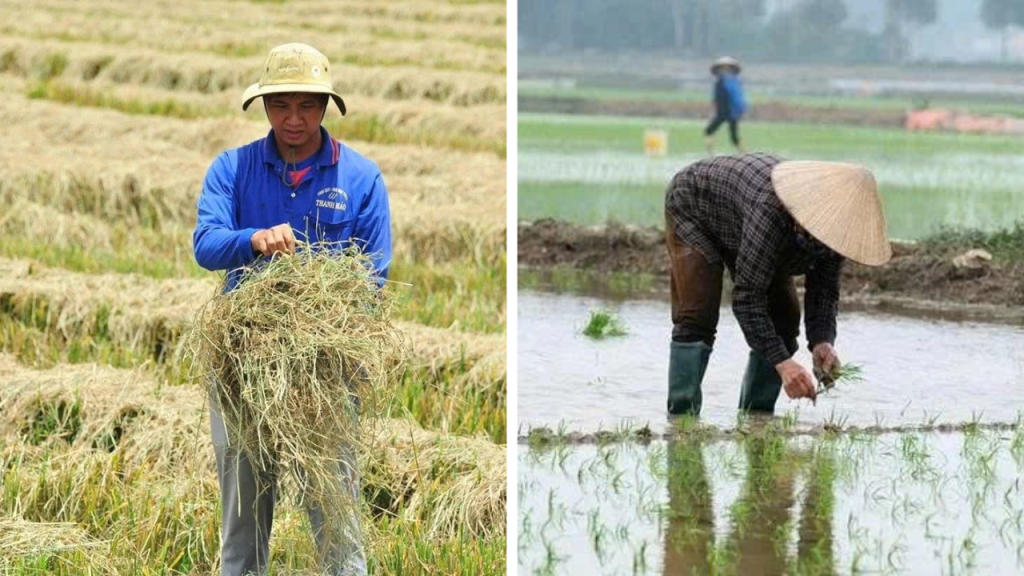
Rural development plays a fundamental role in building modern and sustainable communities. In Vietnam, the past decade has witnessed significant progress, from improved infrastructure and increased income to enhanced quality of life for rural populations.
However, this development also presents challenges, particularly in balancing modernization with the preservation of traditional values. This requires innovative planning solutions combined with technological applications—especially smart agriculture.
Challenges in Rural Development
1. Balancing Modernization and Cultural Preservation
- Many areas struggle to maintain traditional landscapes while upgrading infrastructure
- Rural “urbanization” and excessive concrete development are impacting traditional agricultural lifestyles
2. Inefficient Land Use and Planning
- Land-use maps remain incomplete or outdated
- Limited community participation in planning processes
- Architectural designs often lack local identity
- 3. Fragmented Rural Infrastructure
- Unplanned construction leads to inconsistent development
- Land-for-infrastructure models fragment production spaces
- Traditional structures such as gardens, ponds, and livestock areas are gradually shrinking
The Role of Smart Agriculture and Technology
1. Development of Integrated Rural Hubs
- Acting as connections between production, processing, and logistics
- Linking raw material zones with cold storage, quality control systems, and deep processing facilities
2. Benefits of Agricultural Technology
- Processing & Preservation: Reducing post-harvest losses and extending product lifecycles
- Smart Farming: Applying IoT, automated irrigation, and mechanization to improve productivity
- Labor Transformation: Shifting from traditional farming to higher-value service sectors
International Experiences in Rural Development
Japan
- Combines high-tech agriculture with agri-tourism, turning cultural value into competitive advantage
United States
- Develops large-scale farms with automation to optimize costs and supply chains
France
- Establishes green belts around urban areas, integrating environmental preservation with urban agriculture
Typical Models in Vietnam
Hai Phong
- Duc Chinh Commune has developed 360 hectares of export-oriented carrot production, demonstrating the effectiveness of integrated infrastructure
Bac Ninh
- Large-scale production combining crop cultivation and livestock, creating sustainable agricultural value chains
Kien Hai
- Application of VietGAP standards and hydroponics enables products to meet supermarket distribution requirements
Strategies for Sustainable Rural Development
1. Prioritizing Infrastructure Investment
- Developing transportation networks connecting production areas to markets
- Building cold storage systems and environmentally friendly waste treatment facilities
2. Flexible Land Policies
- Establishing concentrated production zones
- Ensuring farmers’ rights while preserving village structures
3. Strengthening Community Participation
- Integrating cultural elements into planning
- Preserving traditional structures such as communal houses, temples, and village ponds
4. Enhancing Human Resource Development
- Improving technical and management skills
- Promoting digital commerce and technology adoption
Conclusion
Rural development in Vietnam must move toward a modern, sustainable, and environmentally friendly model while preserving traditional cultural identity.
The integration of smart agriculture, logistics systems, and community-based planning will enhance the competitiveness of rural areas and ensure a harmonious balance between economic growth and cultural preservation in the long term.
Source: VnEconomy
https://vneconomy.vn/nganh-nong-nghiep-chu-dong-thich-ung-voi-bien-dong-giu-nhip-tang-truong.htm