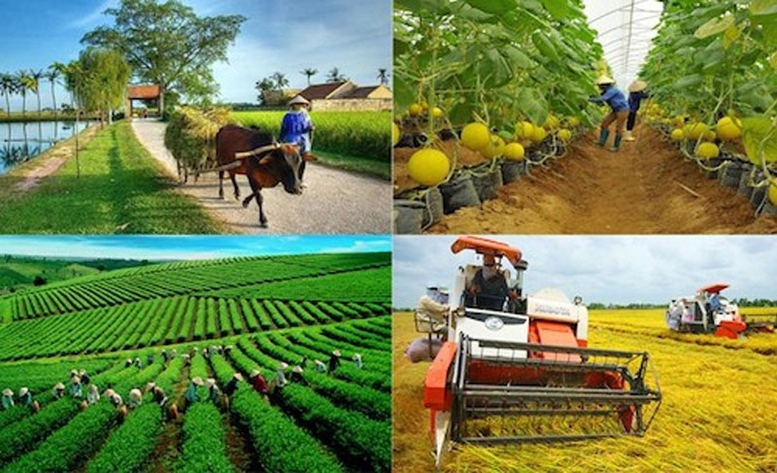
Amid escalating climate change and the growing demand for sustainable development, the Mekong Delta is gradually implementing low-emission agricultural models aimed at reducing environmental impact while enhancing economic efficiency.
Notably, farmers’ production mindset is undergoing a clear transformation—from “agricultural production” to “agricultural economics,” with a focus on value creation and meeting green market standards.
Emission Reduction Solutions in Rice Cultivation
Rice farming is at the forefront of adopting emission reduction practices. New cultivation models help to:
- Reduce methane emissions
- Optimize the use of water and fertilizers
- Improve productivity and product quality
These changes not only bring environmental benefits but also enhance production efficiency for farmers.
Positive Outcomes from Pilot Models
Pilot models have demonstrated encouraging results:
- Reduced input costs
- Increased productivity and agricultural value
- Lower environmental risks
These successes provide a strong foundation for scaling up low-emission agricultural models across the region.
Expanding to Livestock and Aquaculture
Emission reduction initiatives are not limited to rice production but are also being extended to other sectors:
Livestock
- Application of biogas systems for waste treatment
- Reuse of waste as organic fertilizers
- Adjustment of feed composition to reduce methane emissions
Aquaculture
- Implementation of Recirculating Aquaculture Systems (RAS)
- Water conservation and reduced discharge
- Adoption of solar energy to lower costs and CO₂ emissions
The Role of Forestry and Technology
Forestry plays a critical role in carbon sequestration and balancing agricultural emissions:
- Sustainable forest management with FSC certification
- Use of remote sensing technologies for forest digitization
- Expansion of REDD+ programs and participation in carbon credit markets
At the same time, technology contributes significantly to emission reduction:
- Digital transformation in irrigation management
- Energy-efficient mechanization
- Application of solar energy in processing and storage
A Common Goal: Reducing Emissions While Enhancing Efficiency
A shared objective across all solutions is to reduce emissions without increasing production costs, while delivering practical benefits:
- Lower input costs
- Reduced environmental risks
- Expanded access to green-standard markets
Rice fields—where changes are clearly reflected in each crop cycle—are becoming the starting point for the transition toward sustainable agriculture.
Conclusion
Low-emission agriculture is no longer just a trend but an inevitable pathway for the Mekong Delta.
As “green” agricultural products gain increasing acceptance in global markets, this transformation will create a ripple effect across the entire sector, contributing to the development of a modern, efficient, and sustainable agricultural system in Vietnam.
Source: VnEconomy
https://vneconomy.vn/mo-hinh-san-xuat-lua-phat-thai-thap-the-manh-nong-nghiep-dong-bang-song-cuu-long.htm